How to Build a Workout Habit

Building a workout habit sounds simple until it is raining, your inbox is aggressive, your couch looks unusually supportive, and your brain begins presenting legal arguments against movement. This is why a habit cannot depend on mood alone.
A workout habit is a system. It is a set of cues, routines, rewards, and expectations that make exercise easier to repeat. Once the system is in place, you do not need to reinvent your fitness life every Monday morning.
Start Smaller Than Your Ego Wants
Most people begin with too much ambition. They decide to work out six days a week, overhaul their diet, wake up at dawn, drink more water, stretch nightly, and become a completely different person by Thursday.
That kind of enthusiasm is admirable. It is also unstable.
Start smaller. Choose a workout habit that feels almost too easy. Ten minutes per day. Three workouts per week. A walk after lunch. A short strength session before your shower.
Small habits are not weak. They are strong because they survive. Once the habit is automatic, you can build on it.
Attach Exercise to an Existing Routine
Habits form faster when they connect to something you already do. This is called habit stacking.
For example:
Habit Stack Examples
• After brushing your teeth, do five minutes of stretching.
• After lunch, walk for ten minutes.
• After work, change into workout clothes before checking your phone.
• After morning coffee, start a short strength circuit.
• After dinner, take a neighborhood walk.
The existing habit becomes the trigger. You are not relying on memory or motivation. You are linking exercise to a routine already installed in your life.
Design Your Environment
Your environment can either support your workout habit or quietly sabotage it while pretending to be neutral.
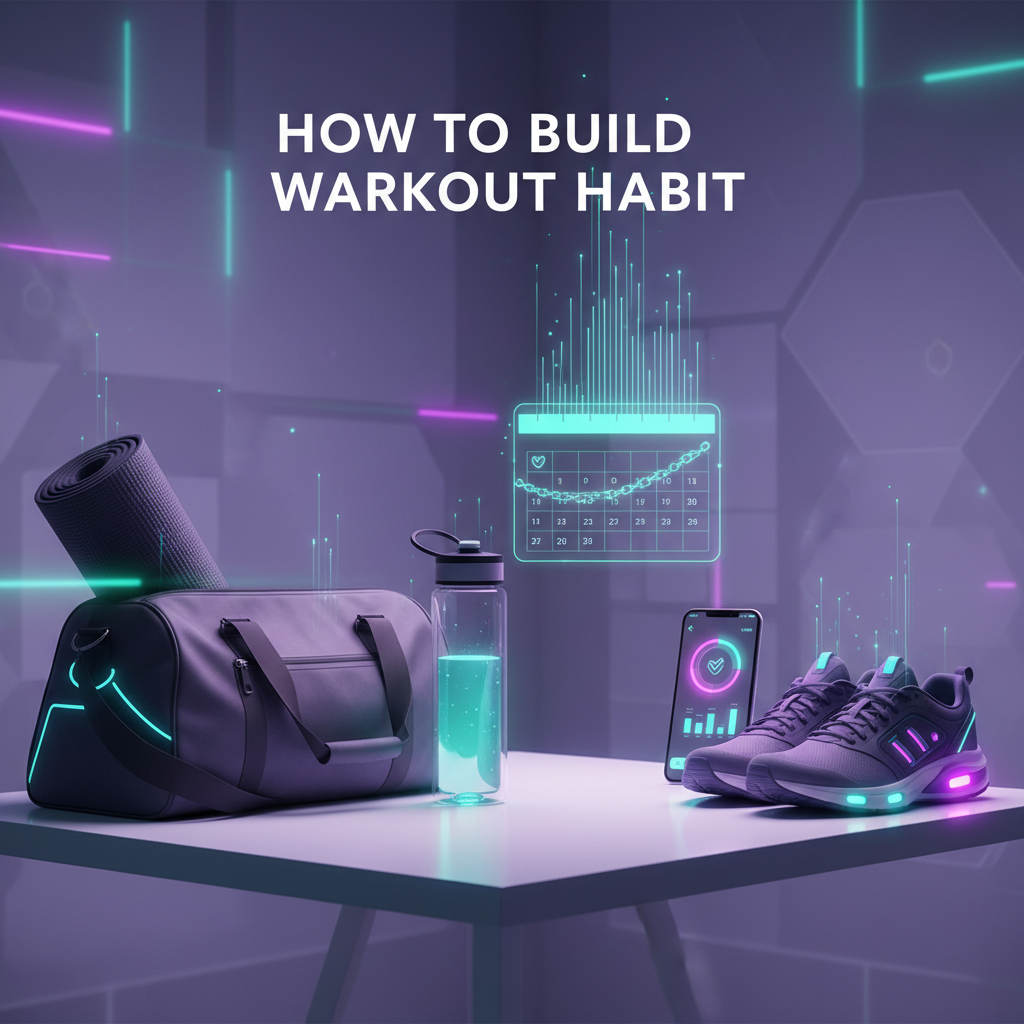
Put workout clothes where you can see them. Keep shoes near the door. Place resistance bands in your living room. Pack your gym bag the night before. Set your phone to open your fitness app at workout time. Remove small barriers before they become excuses.
The goal is to make the healthy action obvious and convenient.
If the remote control is easier to find than your running shoes, do not be shocked when the remote control wins.
Create a Clear Workout Plan
A vague plan creates decision fatigue. "I should exercise today" is not a plan. It is a polite suggestion.
A clear plan sounds like this: "Monday, Wednesday, and Friday at 7:00 a.m., I will do a 30 minute strength workout in the garage." Or: "Every weekday after lunch, I will walk for 15 minutes."
Be specific about the day, time, place, and activity. Clarity removes negotiation.
Use a Minimum Workout
Every workout habit needs a minimum version. This protects you from all-or-nothing thinking.
Your minimum workout might be:
• 10 minutes of walking
• One round of a bodyweight circuit
• Five minutes of mobility
• 20 squats and 20 lunges
• A quick stretching session
This minimum keeps the habit alive on busy days. It tells your brain, "We still show up here."
Many people fail because they believe a short workout does not count. It counts. It may not be your dream workout, but it is a vote for the identity you are building.
Track the Habit
Tracking creates awareness. It also creates satisfaction. Checking off a workout is a small moment of victory, and small victories are habit fuel.
Use a calendar, habit app, notebook, smartwatch, or fitness rewards app. Workout 4 Cash can be useful here because it turns movement and challenges into visible progress, making exercise feel less like a private struggle and more like a game you are actively playing.
The tracking method matters less than the consistency of using it.
Reward Completion
A habit becomes stronger when your brain receives a reward after the behavior. The reward does not need to be huge. It can be a checkmark, a favorite smoothie, a hot shower, a podcast you only listen to while walking, or progress toward app-based rewards.
The important thing is to make completion feel good. Your brain repeats behaviors that feel rewarding.
This is not childish. It is biology with better branding.
Expect Resistance
Resistance is normal. At some point, you will not feel like exercising. This does not mean the habit is failing. It means you are human.
Plan for resistance. Decide in advance what you will do when you are tired, busy, traveling, or unmotivated. Have a backup workout. Use the minimum version. Shorten the session. Change the activity.
The question is not, "How do I avoid resistance?" The question is, "What will I do when resistance shows up wearing a convincing disguise?"
Build Identity
The strongest habits are connected to identity. Instead of saying, "I am trying to work out," start saying, "I am someone who moves daily" or "I am someone who trains three times a week."
Identity may sound fluffy, but it influences behavior. When exercise becomes part of who you are, each workout reinforces that identity. Each missed workout becomes a temporary interruption, not a total collapse.
You are not chasing a perfect streak. You are becoming a person who returns.
Make It Enjoyable Enough
You do not have to love every second of exercise. Some workouts are character building in the same way assembling furniture is character building. But your routine should not be constant misery.
Choose activities you can tolerate, then gradually find ones you enjoy. Walking, dancing, lifting, cycling, boxing, swimming, hiking, yoga, sports, and fitness challenges all count. The best workout habit is the one you will repeat.
Final Takeaway
To build a workout habit, start small, attach exercise to existing routines, design your environment, track progress, and reward completion. Use minimum workouts to survive hard days. Expect resistance. Return quickly when you miss.
Habits are not built through one heroic effort. They are built through repeated proof. Every time you show up, even briefly, you teach yourself that exercise belongs in your life.
Eventually, the habit becomes less dramatic. You stop needing a motivational speech. You just put on the shoes and go.